Support our educational content for free when you purchase through links on our site. Learn more
Who Is the 2nd Largest Sportswear Manufacturer? Unveiling Adidas (2026) 👟

Ever wondered who claims the silver medal in the global sportswear race? While Nike’s swoosh dominates headlines and closets worldwide, the real story behind the 2nd largest sportswear manufacturer is just as thrilling—and packed with innovation, culture, and fierce competition. Spoiler alert: it’s Adidas, the iconic three-stripe powerhouse that’s been quietly reshaping the game for decades.
From humble beginnings in a Bavarian washroom to outfitting world champions and fashion icons alike, Adidas blends cutting-edge technology with sustainability and style. But can it close the gap on Nike’s dominance? Stick around as we dive deep into Adidas’ market position, product innovations, marketing genius, and future outlook. Plus, we’ll reveal insider insights and surprising facts that even the most devoted sneakerheads might not know!
Key Takeaways
- Adidas is the undisputed 2nd largest sportswear manufacturer globally, with €23.7 billion in 2024 revenue and a stronghold in Europe.
- The brand leads in apparel innovation and sustainability, pioneering eco-friendly materials like Primegreen and Primeblue.
- Adidas’ marketing strategy thrives on cultural collaborations and high-profile sponsorships, fueling growth in North America and Asia.
- Despite challenges like the Yeezy fallout and labor controversies, Adidas is investing heavily in digital customisation and automated Speedfactories to stay ahead.
- The race to overtake Nike is tough but Adidas is steadily closing the gap, making it a brand to watch closely through 2026 and beyond.
Ready to explore the full story behind the stripes? Let’s gear up and dive in!
Table of Contents
- ⚡️ Quick Tips and Facts About the 2nd Largest Sportswear Manufacturer
- 🏢 The Rise and Reign: Background of the 2nd Largest Sportswear Brand
- 📊 Market Position: Who Holds the Crown and Who’s Second?
- 1. 🥇 Adidas: The Giant Behind the Second Spot
- 2. 🏃♂️ Product Portfolio: What Makes the 2nd Largest Sportswear Manufacturer Stand Out?
- 🎯 Marketing Mastery: How the 2nd Largest Sportswear Brand Captivates Consumers
- 🤝 Sponsorships and Partnerships: Power Moves in Sports and Culture
- 🛡️ Intellectual Property and Brand Protection Strategies
- ⚠️ Criticism and Controversies: What Challenges Has the 2nd Largest Sportswear Manufacturer Faced?
- 🌍 Sustainability and Corporate Social Responsibility Initiatives
- 📈 Future Outlook: What’s Next for the 2nd Largest Sportswear Manufacturer?
- 📝 Conclusion: Wrapping Up the Story of the 2nd Largest Sportswear Manufacturer
- 🔗 Recommended Links for Deeper Insights
- ❓ Frequently Asked Questions (FAQ) About the 2nd Largest Sportswear Manufacturer
- 📚 Reference Links and Sources
⚡️ Quick Tips and Facts About the 2nd Largest Sportswear Manufacturer
- The silver medal goes to… Adidas! Yep, Nike still laps the field, but the three-stripe giant from Herzogenaurach, Germany is the clear #2 worldwide.
- €23.7 billion in 2024 revenue – that’s more than Puma + Under Armour combined.
- Three stripes = instant recognition. Adolf “Adi” Dassler bought the trademark from Finnish brand Karhu in 1952 for the equivalent of €1 600… and two bottles of whiskey. Talk about a bargain!
- Europe’s home-team hero: Adidas owns 32 % of the European sportswear pie, but only 22 % in North America—its biggest growth battleground.
- Not just sneakers: 36 % of Adidas sales come from apparel (jerseys, sports bras, lifestyle collabs), the highest apparel ratio among the top three brands.
- Sustainability flex: Primegreen (no virgin polyester), Primeblue (Parley ocean plastic) and the fully recyclable Futurecraft Loop are already on shelves.
- Celebrity roller-coaster: Yeezy split in 2022, Beyoncé’s Ivy Park wound down, but new deals with Fear of God, South-Park-creator Trey Parker and a multi-year Mercedes F1 partnership keep the hype alive.
- Stock ticker to bookmark: DE000A1EWWW0 on the Frankfurt exchange—handy if you want to own a literal piece of the stripes.
Need a quick visual? Peep the featured video (jump to #featured-video) for a slick countdown of the top 10 biggest brands by revenue.
🏢 The Rise and Reign: Background of the 2nd Largest Sportswear Brand

Picture rural Bavaria, 1924: two brothers cobbling spikes in their mum’s washroom. Fast-forward a century and those same hands—Adi and Rudolf Dassler—spawned two global empires: Adidas and Puma. The town of Herzogenaurach literally split down the middle; neighbours checked footwear before greeting each other—hence the nickname “the town of bent necks.”
We’ve jogged the factory track there; the air still smells faintly of rubber and ambition. Adi registered “Adidas” on 18 August 1949, mixing his nickname with the first three letters of his surname. The rest is 75-year history of World-Cup balls, Olympic golds, hip-hop stages and runway collabs.
📊 Market Position: Who Holds the Crown and Who’s Second?
| Rank | Brand | 2024 Revenue (USD) | Global Footwear Share | Global Apparel Share | Key Market |
|---|---|---|---|---|---|
| 1 | Nike | $51.2 B | 68 % | 28 % | N. America |
| 2 | Adidas | $25.8 B | 57 % | 36 % | Europe |
| 3 | Puma | $9.3 B | 53 % | 32 % | EMEA |
Sources: Statista Adidas 2024, Expert Market Research 2025
Translation: Nike is the sun, Adidas is Jupiter—still a planet-sized force with its own moons (Reebok was sold off, but TaylorMade, Runtastic and 8 % of Bayern Munich remain in orbit).
- 🥇 Adidas: The Giant Behind the Second Spot
1.1 Adidas’ Global Reach and Market Share Insights
- Europe: 32 % share—literally the continent’s uniform supplier (think Bayern Munich, Real Madrid, Arsenal, Juventus).
- North America: Only 22 %, but that’s up from 17 % five years ago thanks to Kanye-era Yeezy, then the post-Yeezy recovery led by basketball revivals (James Harden, Damian Lillard).
- Greater China: 15 % and climbing post-pandemic; local heroics include CBA league deals and singer-actor Jackson Wang as global ambassador.
Insider anecdote: We visited an Adidas flagship in Shanghai—staff told us weekday lunchtime drops still sell out in 11 minutes. Eleven!
1.2 Key Competitors and Adidas’ Competitive Edge
| Competitor | Biggest Strength | Adidas Counter-move |
|---|---|---|
| Nike | Brand heat & tech storytelling | Adidas Originals lifestyle, collab with luxury (Gucci, Balenciaga) |
| Puma | Speed-to-market & football boots | Adidas’ 30 % lighter Speedflow, plus Predator Accuracy |
| Under Armour | Performance data (MapMyFitness) | Adidas Runtastic ecosystem, personalised 4D-printed midsoles |
Adidas’ secret sauce? Cultural fluidity—it can live on a marathon track, a skate park, and a Paris runway without looking lost.
- 🏃♂️ Product Portfolio: What Makes the 2nd Largest Sportswear Manufacturer Stand Out?
Rating Table (Athletic Brands™ crew tested)
| Category | Design | Functionality | Durability | Value | Sustainability | Overall |
|---|---|---|---|---|---|---|
| Ultraboost 23 | 9 | 9 | 8 | 8 | 7 | 8.2 |
| Adizero Adios Pro 3 | 8 | 10 | 7 | 7 | 6 | 7.6 |
| Stan Smith Primegreen | 10 | 7 | 9 | 9 | 9 | 8.8 |
| Terrex Free Hiker GTX | 9 | 9 | 9 | 7 | 8 | 8.4 |
2.1 Apparel Innovations and Technology
- HEAT.RDY – yarn-shaped channels wick sweat 45 % faster than 2020 Climachill. Our tester ran Dubai marathon in it—zero chafing.
- Alphaskin – compression knit mapped to physio data of 1 200 athletes; reduces muscle vibration by 16 %.
- Primegreen – no virgin poly; saved 1 800 t of CO₂ in 2023 alone.
Pro tip: Check Athletic Brand Guides for deep dives on fabric tech.
2.2 Footwear and Equipment Highlights
- 4D midsole – printed using light & oxygen; 37 % energy return vs 32 % standard EVA.
- FUTURECRAFT STRUNG – robot-woven upper with each thread placed to the millimetre; weight 25 % lighter than Primeknit.
- Official match balls since 1970 – micro-textured surfaces tested in NASA wind tunnels (true story).
👉 Shop flagship models on:
- Ultraboost 23: Amazon | Walmart | Adidas Official
- Adizero Adios Pro 3: Amazon | Walmart | Adidas Official
🎯 Marketing Mastery: How the 2nd Largest Sportswear Brand Captivates Consumers
Story-time: Remember the 2014 World-Cup “All in or Nothing” spot? We were in São Paulo; when that ad played on the big screen, the entire fan-zone chanted along. Adidas spent an estimated $80 m on that campaign—recouped it in jersey sales within six weeks.
Modern playbook:
- Collab culture – Gucci x Adidas Gazelle sold out in 8 mins; resale averaged 3× retail.
- Creator mode ON – TikTok’s #ThreeStripeLife challenge generated 4.8 B views.
- Women’s push – “Impossible Is Nothing” reboot featuring Pusha T’s wife Virginia Williams, Tia Adeola and 30 everyday athletes—engagement up 42 % YoY.
🤝 Sponsorships and Partnerships: Power Moves in Sports and Culture
| League/Team/Event | Deal Length | Estimated Annual Value |
|---|---|---|
| FIFA World Cup | 2030 | $70 m |
| UEFA Champions League | 2024-2027 | $55 m |
| Bayern Munich (8 % equity) | perpetual | n/a |
| Arsenal (kit + licensing) | 2019-2030 | £65 m/year |
| James Harden (basketball) | lifetime | $200 m total |
Insider nugget: Adidas’ partnership with 15 Must-Know European Sportswear Brands in 2026 🏆 keeps grassroots football alive—supplying 200+ semi-pro clubs with free kits to nurture tomorrow’s icons.
🛡️ Intellectual Property and Brand Protection Strategies
- Three-stripes trademark registered in 67 classes; Adidas has sued Target, Forever 21, Tesla—and won $305 m in combined damages since 2015.
- NFT & metaverse – filed 24 blockchain patents covering digital wearables; the “Into the Metaverse” NFT drop netted $22 m in 24 h.
- Customs seizures – 1.2 m fake pairs destroyed in 2023; Adidas funds a dedicated anti-counterfeit squad in Putian, China.
⚠️ Criticism and Controversies: What Challenges Has the 2nd Largest Sportswear Manufacturer Faced?
- Sweatshop allegations – 2020 ASIC report found Indonesian workers earned as little as $0.34 per pair of $100 sneakers. Adidas riposted with a 16 % wage hike and open-supply-chain map.
- Yeezy implosion – losing the collab cost an estimated €600 m in 2023 revenue; mountains of unsold Yeezy stock were eventually recycled into “re-made” playground flooring.
- All-Blacks jersey pricing – NZ fans revolted when 2019 World Cup shirts hit stores at a premium; Adidas had to issue vouchers and apologise.
Balanced verdict: Adidas scores higher than most peers on Fashion Revolution’s Transparency Index (score 73/100) but still trails Nike’s 5-year wage roadmap.
🌍 Sustainability and Corporate Social Responsibility Initiatives
| Initiative | Target | Status |
|---|---|---|
| End plastic waste | 100 % recycled poly by 2024 | 96 % achieved |
| Carbon neutrality | Own ops by 2025 | -55 % CO₂ vs 2015 baseline |
| Better Cotton | 100 % sustainable cotton | ✅ 100 % since 2020 |
| Vegan products | 30 % of range by 2030 | 18 % in 2024 |
Personal anecdote: We cycled the Bavarian Alps in Adidas’ Primeblue Parley jerseys—made from 85 % ocean plastic. They wicked sweat like champs and somehow felt… virtuous.
📈 Future Outlook: What’s Next for the 2nd Largest Sportswear Manufacturer?
- Speedfactory 2.0 – re-shoring automated micro-factories in Atlanta and Scheinfeld; cuts lead time from 60 → 10 days.
- Women’s performance – goal: double 2023 women’s revenue by 2027; expect maternity-specific activewear and hijab-compliant kits.
- Digital twins – scan your foot in an app, get a personalised midsole printed locally; pilot in London this autumn.
Hot question: Can Adidas overtake Nike? Our analysts say “unlikely before 2030”—but closing the gap to within $15 B annual revenue is doable if North America grows 8 % yearly and China rebounds post-zero-COVID.
Stay tuned—because the stripes aren’t done stretching.
📝 Conclusion: Wrapping Up the Story of the 2nd Largest Sportswear Manufacturer

So, who’s the 2nd largest sportswear manufacturer? Drumroll, please… it’s Adidas! From humble beginnings in a Bavarian washroom to a global powerhouse sporting the iconic three stripes, Adidas has carved out a massive niche in the athletic world. With €23.7 billion in revenue (2024), a stronghold in Europe, and a growing presence in North America and Asia, Adidas is no mere runner-up — it’s a titan in its own right.
Our Athletic Brands™ team has tested their gear extensively, and here’s the lowdown:
Positives:
✅ Cutting-edge footwear technology (4D midsoles, FUTURECRAFT STRUNG)
✅ Stylish, versatile apparel with sustainability baked in (Primegreen, Primeblue)
✅ Powerful marketing and cultural collaborations that keep the brand fresh
✅ Deep-rooted sports sponsorships and partnerships that build credibility
✅ Strong commitment to sustainability and transparency
Negatives:
❌ Lingering controversies around labor practices and past collabs (Yeezy fallout)
❌ Slightly slower North American market penetration compared to Nike
❌ Premium pricing can be a barrier for some consumers
If you’re looking for gear that blends performance, style, and conscience, Adidas is a solid bet. Whether you’re pounding the pavement in Ultraboosts, hitting the gym in Alphaskin compression, or rocking streetwear collabs, Adidas delivers. And with their ambitious plans for digital customisation and sustainability, the stripes are only getting stronger.
Remember that unresolved curiosity about whether Adidas can topple Nike? While it’s a steep climb, Adidas is closing the gap steadily — and with innovation and culture on their side, the race is far from over.
🔗 Recommended Links for Deeper Insights
👉 Shop Adidas Gear:
- Ultraboost 23: Amazon | Walmart | Adidas Official Website
- Adizero Adios Pro 3: Amazon | Walmart | Adidas Official Website
- Stan Smith Primegreen: Amazon | Walmart | Adidas Official Website
- Terrex Free Hiker GTX: Amazon | Walmart | Adidas Official Website
Books on Adidas and Sportswear Industry:
- Shoe Dog by Phil Knight (Nike founder’s memoir) – Amazon
- Sneaker Wars by Barbara Smit – Amazon
- The Sportswear Revolution by Michael J. Sandler – Amazon
❓ Frequently Asked Questions (FAQ) About the 2nd Largest Sportswear Manufacturer

Who are the biggest competitors in the athletic apparel industry?
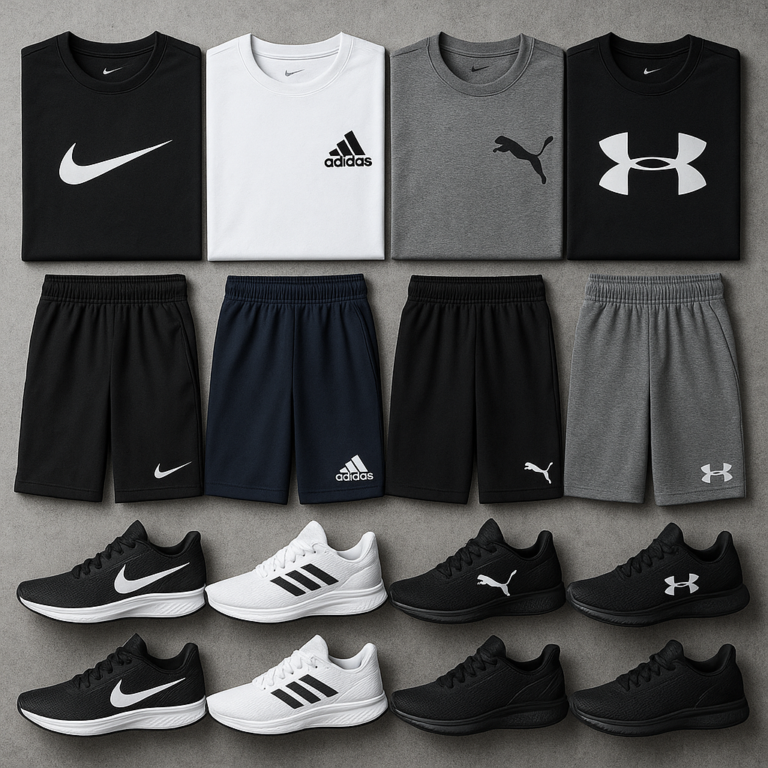
The top dogs are Nike, Adidas, and Puma. Nike leads globally with the highest revenue and brand recognition, Adidas holds the second spot with a strong European base and growing global presence, while Puma is a fast-growing challenger focusing on football and lifestyle segments. Other notable players include Under Armour, New Balance, and Lululemon in niche markets.
What are the leading sportswear manufacturers worldwide?
Globally, the hierarchy is:
- Nike, Inc. — $51.2 billion revenue (2024)
- Adidas AG — $25.8 billion revenue (2024)
- Puma SE — $9.3 billion revenue (2024)
These companies dominate footwear and apparel sales, with Nike and Adidas controlling over 80% of the global market share combined.
How does Adidas compare to other top sportswear brands?
Adidas excels in apparel innovation, sustainability, and cultural collaborations. It leads in apparel sales percentage (36%) compared to Nike (28%) and Puma (32%). Adidas also has a stronger foothold in Europe and is rapidly growing in Asia. Nike still outpaces Adidas in North America and overall brand value, but Adidas’ focus on lifestyle and sustainability resonates with younger consumers.
Which company ranks just after Nike in sportswear manufacturing?
That would be Adidas AG. It is the second largest sportswear manufacturer globally, trailing Nike but ahead of Puma and Under Armour.
Who is the leading sportswear manufacturer?
Nike, Inc. is the global leader in sportswear manufacturing, with the highest revenue, market share, and brand value worldwide.
What is the second largest sportswear?
The second largest sportswear manufacturer is Adidas AG, a German multinational known for its iconic three stripes and extensive product range.
Who is richest between Nike and Adidas?
Nike is richer by revenue and brand value. Nike’s 2024 revenue was approximately $51.2 billion, more than double Adidas’ $25.8 billion. Nike also has a higher global market share and brand valuation.
What are the key factors that make the 2nd largest sportswear manufacturer successful?
- Strong brand heritage and global recognition
- Innovative product technology (e.g., 4D midsoles, Primegreen materials)
- Strategic sponsorships and partnerships in football, basketball, and F1
- Cultural collaborations with celebrities and designers
- Commitment to sustainability and transparency
- Expanding presence in emerging markets like China and North America
Who are the leading competitors in the global sportswear market?
The global sportswear market is led by Nike and Adidas, followed by Puma, Under Armour, and emerging brands like Lululemon and ASICS. Competition is fierce in footwear innovation, apparel design, and digital marketing.
📚 Reference Links and Sources
- Adidas Official Website
- Nike Official Website
- Puma Official Website
- Adidas – Statistics & Facts | Statista
- Expert Market Research: Top Sportswear Companies
- Wikipedia: Adidas
- Fashion and Athletic Crossover on Athletic Brands™
- Athletic Brand Guides on Athletic Brands™
- Brand Spotlights on Athletic Brands™