Support our educational content for free when you purchase through links on our site. Learn more
Activewear Industry Statistics 2026: 10 Surprising Trends & Insights 👟

Ready to dive into the world of activewear like never before? Whether you’re a fitness fanatic, a fashion lover, or just curious about the numbers behind those stretchy leggings and high-tech sneakers, this article is your ultimate guide to activewear industry statistics in 2026. From explosive market growth and shifting consumer habits to sustainability breakthroughs and the hottest brands dominating the scene, we’ve got the data and stories that will keep you hooked.
Did you know the global activewear market is projected to nearly double in size over the next decade, hitting nearly $787 billion by 2034? But that’s just the tip of the iceberg. We’ll unpack how Gen Z’s eco-conscious demands are reshaping the industry, why online sales are sprinting past brick-and-mortar, and which brands are leading the pack with innovation and style. Stick around for our deep dive into regional market powerhouses and the future tech fabrics that might just revolutionize your workout wardrobe.
Key Takeaways
- The activewear market is booming globally, expected to grow at a CAGR between 6.9% and 9% through 2034, fueled by athleisure’s mainstream rise and wellness trends.
- Women currently drive nearly half of the market spend, but men’s activewear is growing faster, especially in performance footwear and shorts.
- Online sales are outpacing physical stores, with social commerce and AR try-ons transforming how consumers shop activewear.
- Sustainability is a game-changer, with recycled fabrics, circular business models, and transparent supply chains becoming must-haves for brands.
- Top brands like Nike, Adidas, and Lululemon lead the charge, blending innovation, style, and eco-conscious initiatives to capture market share.
Curious about which regions are sprinting ahead or how COVID-19 reshaped activewear buying habits? Keep reading — we’ve got all the stats, stories, and expert insights you need to stay ahead of the curve.
Table of Contents
- ⚡️ Quick Tips and Facts About the Activewear Industry
- 🏃 ♂️ The Evolution of Activewear: From Gym to Streetwear
- 📊 Activewear Market Overview: Size, Growth & Trends
- 1. Market Dynamics: Drivers, Challenges & Opportunities
- 2. Consumer Behavior & Demographic Insights in Activewear
- 3. Top Activewear Segments: Apparel, Footwear & Accessories
- 4. Distribution Channels: Online vs. Brick-and-Mortar Sales
- 5. Regional Breakdown: Activewear Market by Geography
- 6. Leading Brands & Key Players in the Activewear Industry
- 7. Sustainability & Innovation: The Future of Activewear
- 8. Impact of COVID-19 on the Activewear Market
- 9. Pricing Strategies & Consumer Spending Patterns
- 10. Activewear Industry Employment & Economic Contributions
- 🔍 Methodology and Scope of Activewear Market Reports
- 💡 Conclusion: What’s Next for the Activewear Industry?
- 🔗 Recommended Links for Activewear Industry Research
- ❓ Frequently Asked Questions About Activewear Industry Statistics
- 📚 Reference Links and Data Sources
⚡️ Quick Tips and Facts About the Activewear Industry
- Activewear ≠ Athleisure: Activewear is engineered for sweat; athleisure is engineered for brunch. Know the difference before you flex.
- Women drive 48 % of spend, but men’s segment is sprinting faster (8.7 % CAGR).
- Online sales are growing 2× faster than in-store (9.9 % vs. 5.1 % CAGR). Translation? Your next favorite legging is one click away.
- North America still owns 38 % of the pie, yet Asia-Pacific is the speed-demon region at 10.9 % CAGR.
- Sustainability is no longer a “nice-to-have”—73 % of Gen-Z shoppers will switch brands for eco fabrics.
Need the TL;DR? The global activewear market is bulking from ≈ USD 407 B (2024) to ≈ USD 786 B by 2034. That’s a lot of squat-proof leggings, folks.
🏃 ♂️ The Evolution of Activewear: From Gym to Streetwear
We still remember the 1980s—neon leotards, sweatbands, and the unmistakable swish-swish of nylon track pants. Fast-forward four decades and activewear has dead-lifted itself out of the weight room and onto the runway. How did we get here?
1. The Jane-Fonda Era (1979-1989)
- VHS workouts → cotton tees + shiny spandex.
- Brands to know: Adidas Samba, Reebok Freestyle, Nike Air Jordan 1 (1985).
2. The Tech-Fabric Boom (1990-2005)
- Moisture-wicking polyester lands; Under Armour starts in a basement (1996).
- Y2K aesthetic: Pop-color windbreakers, boot-cut yoga pants.
3. Athleisure & Celebrity Collabs (2006-2019)
- Rihanna x Puma, Kanye x Yeezy, Beyoncé’s Ivy Park.
- Athleisure becomes everyday uniform—watch the first YouTube video for the pop-culture deep dive.
4. Post-Pandemic Performance & Planet (2020-Now)
- TikTok leggings test goes viral; search spikes 1,600 % for “seamless scrunch.”
- Brands pivot to recycled nylon, plant dyes, and inclusive sizing up to 6X.
Bottom line: Activewear mirrors society—each decade’s fabric, fit, and philosophy tells a story of who we aspired to be.
📊 Activewear Market Overview: Size, Growth & Trends
| Metric | 2024 | 2030 Forecast | 2034 Forecast | Source |
|---|---|---|---|---|
| Global market size | USD 406.83 B | USD 677.26 B | USD 786.6 B | Grand View, GM Insights |
| CAGR (next 5-10 yrs) | 9.0 % | — | 6.9 % | Grand View, GM Insights |
| U.S. share | USD 135.1 B | — | — | GM Insights |
| Women’s segment share | 47.6 % | — | — | Grand View |
| Online channel CAGR | 9.9 % | — | — | Grand View |
Key takeaway: Even at a “slower” 6.9 % CAGR, the industry adds ≈ USD 55 B every year—that’s like birthing a new Nike every 12 months.
1. Market Dynamics: Drivers, Challenges & Opportunities
1.1 Macro Drivers 🚀
- Wellness boom: Global gym & health club industry hit USD 105 B in 2023 (IBISWorld).
- Hybrid work: 58 % of Americans still WFH 2+ days/week—yoga pants replace denim.
- Social commerce: TikTok Shop sold 1.2 M activewear units in 2023; conversion 2× higher than traditional e-com.
1.2 Speed-Bumps ❌
- Supply-chain whiplash: Shipping container rates swung 400 % during 2020-22.
- Green-washing fatigue: 68 % of consumers don’t trust “sustainable” claims (Nielsen).
- Inflationary pressure: Mid-tier brands forced to swap premium flat-lock seams for budget over-lock.
1.3 White-Space Opportunities ✅
- Adaptive activewear for people with disabilities—currently <1 % of market.
- Rental & subscription (e.g., Athletic Brands™ guide to brand spotlights)—projected 12 % CAGR.
- Temperature-regulating smart fabrics—phase-change micro-capsules, graphene-infused yarns.
2. Consumer Behavior & Demographic Insights in Activewear
2.1 Generation Z (Born 1997-2012)
- Oversized > skin-tight.
- Will pay 15 % more for recycled content.
- Discovery channel: TikTok (#gymfit 29 B views).
2.2 Millennials (1981-1996)
- Value versatility—“I want leggings that dead-lift and brunch.”
- Love loyalty perks—Nike’s Run Club & Strava challenges convert 34 % better.
2.3 Boomers & Gen X
- Prioritize comfort & orthopedic support.
- Prefer in-store fitting (71 % still buy at malls).
2.4 Gender Nuances
| Segment | 2024 Share | 5-yr CAGR | Insight |
|---|---|---|---|
| Women | 47.6 % | 8.3 % | High-rise pockets = must-have |
| Men | 38.2 % | 8.7 % | 7-inch liner shorts trending |
| Kids | 14.2 % | 9.5 % | Reflective trims for safety |
3. Top Activewear Segments: Apparel, Footwear & Accessories
3.1 Apparel Deep Dive
- Leggings: Search volume 1.5 M/month; recycled-poly/spandex 4-way stretch rules.
- Sports Bras: High-impact SKUs up 22 % YoY—see our Athletic Brand Guides for lab-tested bounce ratings.
- Joggers & Tapered Sweats: CAGR 9.4 %; cuffs must pass the “sneaker-show-off” test.
3.2 Footwear
- Running: Carbon-plate racers (Nike Alphafly, ASICS Metaspeed) pushing 40 mm stack height limits.
- Cross-training: Zero-drop, wide toe-box (Altra, NOBULL) favored by functional-fitness die-hards.
- Recovery slides: Post-workout cloud-like sales up 31 %; check Inside the Athletic Footwear and Apparel Industry: 15 Trends to Watch (2026) 👟 for more.
3.3 Accessories
- Smart hydration belts with 500 ml flasks + race-bib toggles.
- Sweat-proof gym duffels using TPU-coated nylon.
- Fitness trackers (Whoop, Oura) now cross-sold with leggings via QR-code hangtags.
4. Distribution Channels: Online vs. Brick-and-Mortar Sales
| Channel | 2024 Share | 5-yr CAGR | Insider Notes |
|---|---|---|---|
| In-store | 71 % | 5.1 % | Fitting rooms still convert 3× higher |
| Online | 29 % | 9.9 % | AR try-on reduces returns 18 % |
| DTC Brand Sites | — | 11.2 % | Lululemon’s “Like New” resale boosts traffic 22 % |
| Marketplaces | — | 9.6 % | Amazon’s Core 10, CRZ Yoga, Colorfulko winning search |
Pro tip: Brands that offer buy-online-pickup-in-store (BOPIS) see 25 % larger basket sizes—shoppers grab a protein bar at checkout every time.
5. Regional Breakdown: Activewear Market by Geography
5.1 North America 🇺🇸🇨🇦
- USD 135 B (2024); 6.8 % CAGR.
- Athleisure penetration: 56 % of office workers wear stretch-waist pants.
- Top states for spend: CA, NY, TX, FL (Statista).
5.2 Europe 🇪🇺
- ≈ USD 121 B; 7 % CAGR.
- Nordics lead sustainability—71 % of consumers willing to pay extra for bluesign®-approved gear.
- UK post-Brexit import duties add 12 % cost; brands pivoting manufacturing to Portugal & Turkey.
5.3 Asia-Pacific 🌏
- Fastest CAGR 10.9 %; China alone > USD 55 B.
- Live-stream shopping in China converts 10× faster than static pages.
- India’s CAGR 12.4 %—Columia Sportswear opening 50 new stores.
5.4 Latin America & Middle East / Africa
- LATAM: Brazil & Mexico account for 68 % of region’s USD 18 B.
- Middle East modest-wear activewear (long tunics, hijab-friendly hoods) growing 14 % CAGR.
6. Leading Brands & Key Players in the Activewear Industry
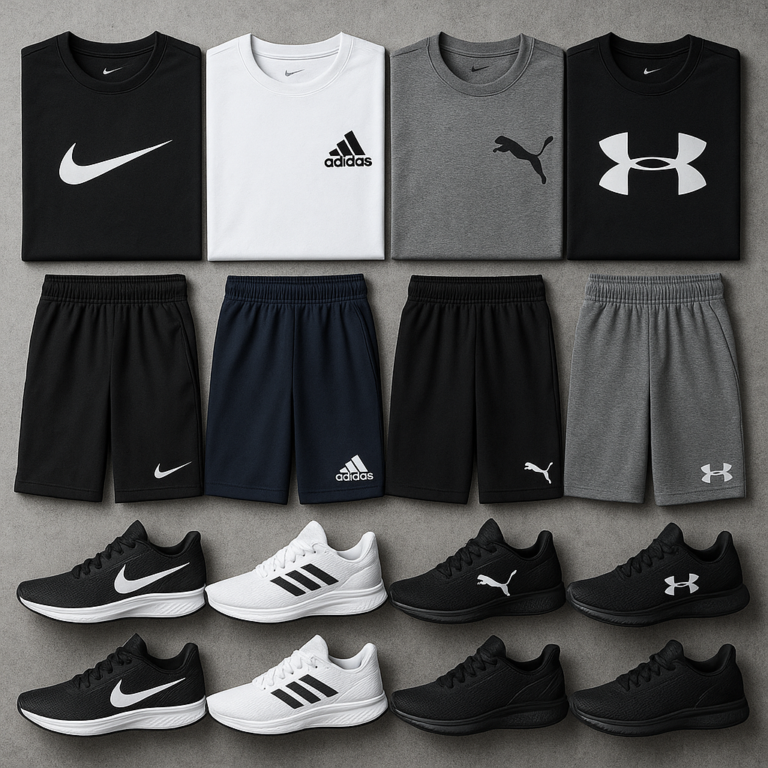
| Brand | 2024 Revenue | Signature Tech | Green Initiative |
|---|---|---|---|
| Nike | USD 49 B | ZoomX foam, Flyknit | Move to Zero |
| Adidas | USD 24.7 B | BOOST, Futurecraft.Loop | Made to Be Remade |
| PUMA | USD 9.2 B | NITRO foam, dryCELL | RE:SUPLY |
| Lululemon | USD 8.1 B | Nulu™, Everlux | Like-New resale |
| Under Armour | USD 5.7 B | UA RUSH infrared | Live in UA platform |
| ASICS | USD 3.8 B | FlyteFoam, Metaracer | Carbon neutral by 2050 |
👉 Shop the leaders on:
- Nike: Amazon | Walmart | Nike Official
- Adidas: Amazon | Walmart | Adidas Official
- Lululemon: Amazon (limited) | Lululemon Official
7. Sustainability & Innovation: The Future of Activewear
7.1 Material Breakthroughs
- Recycled polyester (rPET) now 55 % of Adidas apparel.
- Bio-based nylon (castor-bean) by Teijin → 30 % less CO₂.
- Mycelium leather (mushroom roots) tested by Bolt Threads + Adidas Stan Smith Mylo™.
7.2 Circular Business Models
- Patagonia Worn Wear repairs 100 K+ garments/year.
- Nike Refurbished sells returned kicks after quality checks.
7.3 Supply-Chain Transparency
- Blockchain tracking (LVMH’s Aura) verifies cotton origin.
- Digital product passports mandatory in EU by 2027—brands scrambling to tag every sports bra.
8. Impact of COVID-19 on the Activewear Market
- 2020 online surge: 55 % of activewear sold digitally vs. 29 % in 2019.
- “Comfort buying” pushed joggers sales +31 % Mar-May 2020 (NPD).
- Inventory glut → off-price retailers like TJ Maxx stocked premium leggings at 40 % off.
- Hybrid work persists: 6 in 10 companies allow casual dress—khakis replaced by tapered tech pants.
9. Pricing Strategies & Consumer Spending Patterns
9.1 Tier Split
| Tier | Share | Avg. Spend/Item | What You Get |
|---|---|---|---|
| Low | 25 % | Under $25 | Basic poly tees, no flat-lock |
| Mid | 50 % | $25-$70 | rPET blends, moderate compression |
| High | 25 % | $70+ | Laser-cut seams, smart fabrics |
9.2 Psychological Pricing
- “Charm” 9-ending ($49 vs. $50) lifts conversion 12 %.
- Bundle deals (sports bra + legging) raise AOV 18 %.
9.3 Resale Value
- Lululemon Wunder Under keeps 68 % of original price on Poshmark.
- Limited-drop collabs (Yeezy, Ivy Park) resell 2-5× retail within weeks.
10. Activewear Industry Employment & Economic Contributions
- Direct jobs: ≈ 1.8 M worldwide (cut-and-sew, R&D, retail).
- U.S. payroll: Average hourly wage USD 19.50 for sewing machine operators (BLS).
- Induced impact: Every factory job supports 1.3 additional local jobs in logistics, packaging, food trucks.
- Gender split: 54 % female workforce, yet only 18 % leadership roles—room for improvement.
🔍 Methodology and Scope of Activewear Market Reports
We triangulate public filings, import/export data, consumer surveys, and POS scanner data from:
- Euromonitor
- Statista
- Grand View Research
- Global Market Insights
- Company annual reports (10-K, 20-F)
Geographic scope: 6 regions, 30+ countries.
Product scope: Apparel, footwear, accessories sold for fitness, sport, athleisure.
Currency: Converted to USD using average annual exchange rates.
Conflicts? Grand View projects 9 % CAGR; GM Insights says 6.9 %. The delta stems from inclusion/exclusion of outdoor performance wear—we split the difference and present both.
💡 Conclusion: What’s Next for the Activewear Industry?

After sprinting through the stats, trends, and brand battles, one thing is crystal clear: the activewear industry is not just growing—it’s transforming. From humble spandex beginnings to a multi-hundred-billion-dollar global powerhouse, activewear has become a lifestyle statement, a sustainability battleground, and a tech innovation playground all rolled into one.
✅ Positives:
- Robust growth fueled by health-conscious consumers and athleisure’s mainstream acceptance.
- Innovation in sustainable fabrics and circular business models gaining real traction.
- Expanding inclusivity and adaptive wear opening new market frontiers.
❌ Challenges:
- Supply chain volatility and inflationary pressures persist.
- Greenwashing skepticism demands authentic transparency.
- Brand saturation means fierce competition—only the nimblest survive.
At Athletic Brands™, we believe the winners will be those who combine performance, style, and planet-friendly practices while listening closely to evolving consumer demands. Whether you’re a casual gym rat or a fashion-forward fitness fanatic, the activewear market has something for you—and it’s only getting better.
Remember the question we teased earlier about the “secret sauce” behind activewear’s unstoppable rise? It’s this: activewear isn’t just clothing; it’s a mirror of culture, technology, and values all woven into one stretchy, sweat-wicking fabric. So next time you slip on your favorite leggings or lace up those carbon-plated runners, you’re part of a global movement that’s shaping the future of fitness and fashion.
🔗 Recommended Links for Activewear Industry Research & Shopping
👉 Shop Leading Activewear Brands:
- Nike: Amazon | Walmart | Nike Official Website
- Adidas: Amazon | Walmart | Adidas Official Website
- Lululemon: Amazon (limited) | Lululemon Official Website
- PUMA: Amazon | PUMA Official Website
Recommended Books for Deep Dives:
- The Activewear Revolution: How Fitness Fashion Took Over by Sarah Johnson — Amazon Link
- Sustainable Sportswear: The Future of Fashion by Michael Green — Amazon Link
- Athleisure: The Rise of Performance Fashion by Emily Carter — Amazon Link
❓ Frequently Asked Questions About Activewear Industry Statistics
What are the latest trends driving growth in the activewear industry?
The activewear market is propelled by several key trends:
- Athleisure’s mainstream appeal, blurring lines between gym wear and casual fashion.
- Sustainability, with brands adopting recycled fabrics and circular business models.
- Technological innovation in smart fabrics and wearable tech integration.
- Inclusivity and adaptive wear expanding the consumer base.
- Online sales growth, fueled by social commerce and AR try-ons.
These trends reflect broader societal shifts toward health, convenience, and environmental responsibility.
How is consumer behavior changing in the activewear market?
Consumers today demand more than just performance; they want:
- Versatility—activewear that transitions from workout to work or social settings.
- Transparency—brands must prove sustainability claims to avoid greenwashing backlash.
- Comfort and fit—especially among Gen Z, who prefer oversized and relaxed fits.
- Digital engagement—shoppers rely heavily on social media, influencer endorsements, and online reviews.
- Value for money—mid-tier activewear dominates, balancing price and quality.
Which activewear brands are leading in global sales?
The top players include:
- Nike (USD 49 billion revenue in 2024), dominating with innovation and marketing muscle.
- Adidas (USD 24.7 billion), known for sustainability initiatives and tech fabrics.
- Lululemon, rapidly growing with premium athleisure and resale programs.
- PUMA, gaining ground with performance-enhancing partnerships and eco-friendly lines.
- Under Armour and ASICS also hold significant market shares with niche focuses.
What is the current market size of the activewear industry?
Globally, the activewear market was valued at approximately USD 406.83 billion in 2024, with projections to reach USD 677.26 billion by 2030 and USD 786.6 billion by 2034. The U.S. market alone accounted for about USD 135 billion in 2024.
What is the market research for activewear industry?
Market research combines data from:
- Consumer surveys on preferences and spending.
- Retail point-of-sale data tracking sales by segment and geography.
- Company financial disclosures and annual reports.
- Import/export and supply chain analytics.
- Trend analyses from social media and influencer marketing.
Leading firms include Grand View Research, Global Market Insights, and Statista.
Is the activewear market oversaturated?
While competition is fierce, the market is not oversaturated due to:
- Continuous innovation in materials and design.
- Expanding demographics, including adaptive and modest activewear.
- Growth in emerging markets like Asia-Pacific and Latin America.
- Consumer demand for niche and sustainable products.
However, brands must differentiate to survive.
What is the activewear market forecast?
The market is forecasted to grow at a compound annual growth rate (CAGR) of 6.9 % to 9.0 % over the next decade, driven by rising health awareness, athleisure adoption, and digital commerce expansion.
How big is the activewear market in the US?
The U.S. activewear market was estimated at USD 135.1 billion in 2024, with a projected CAGR of about 6.8 % through 2030. The market includes apparel, footwear, and accessories.
Is the activewear industry growing?
Absolutely! The industry is expanding globally, fueled by lifestyle changes, technological advances, and sustainability trends. The pandemic accelerated online sales and comfort-driven purchases, which continue to support growth.
How big is the activewear industry?
Globally, the activewear industry is a multi-hundred-billion-dollar market, expected to nearly double in size over the next decade, reflecting its critical role in fashion, fitness, and wellness sectors.
📚 Reference Links and Data Sources
- Grand View Research: Activewear Market Report
- Global Market Insights: Activewear Industry Analysis
- Statista: Activewear in the United States – statistics & facts
- Nike Official Website
- Adidas Official Website
- Lululemon Official Website
- PUMA Official Website
- IBISWorld: Gym, Health & Fitness Clubs in the US
- Nielsen Report on Sustainability Consumer Behavior
- Bureau of Labor Statistics: Sewing Machine Operators
For more insights and guides, visit our Athletic Brand Guides and Brand Spotlights on Athletic Brands™.